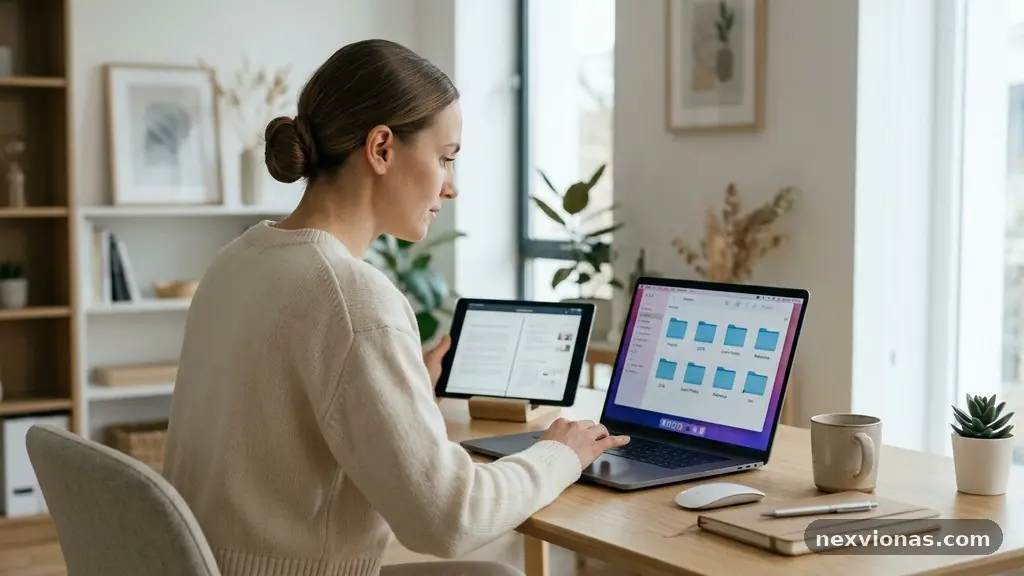
Simple ways to improve file sharing between computers and mobile devices can turn a frustrating chore into a quick, dependable habit. The right method depends on distance, file size, operating systems, privacy needs, and whether both devices share the same network.
A few changes—such as choosing local transfers for large videos, organising cloud folders, or keeping a USB cable nearby—can save minutes every day and prevent duplicate copies. This article explains which options work best in common situations, how to fix failed transfers, and how to build a file-sharing routine that feels simple rather than technical.
Choose the Transfer Method for the Job
The fastest way to improve file sharing is to stop treating every transfer as the same task. A handful of photos sent across a room needs a different solution from a 20GB video archive moving between a laptop and a phone.
Start by asking three practical questions: are the devices close together, do they have internet access, and does the material contain private information? A nearby transfer tool is usually convenient for a small batch, while cloud storage is better when you need the same document on several devices over time.
| Situation | Good first choice | Why it fits |
|---|---|---|
| A few photos between nearby Apple devices | AirDrop | Quick device discovery and direct sharing |
| Android phone and Windows computer nearby | Android Quick Share | Works across supported Android and Windows devices |
| Large files with no reliable internet | USB cable transfer | Stable connection without cloud upload time |
| Files needed on several devices | Google Drive, OneDrive, or Dropbox | Provides access and synchronisation across platforms |
| Many files inside one home or office | Local network sharing or SMB | Useful for repeated access to folders |
Bluetooth file transfer remains useful for small files, especially when Wi-Fi is unavailable, but it is rarely the best choice for large videos or folders. Bluetooth typically takes longer and may require pairing before the transfer begins.
Make your default choice predictable. For example, use AirDrop or Nearby Share for quick personal transfers, a cloud folder for active projects, and a cable for large archives. That simple rule removes much of the guesswork.
Make Nearby Wireless Sharing Work Better
Nearby wireless tools use short-range connections to move files without requiring a USB lead. AirDrop is designed for Apple hardware, while Nearby Share has evolved into Android Quick Share and supports sharing between many Android devices and compatible computers.
Before sending, enable the relevant wireless settings on both devices. Wi-Fi and Bluetooth may both need to be active, even though the actual file transfer does not work like a traditional Bluetooth-only connection.
- Keep the devices within a few metres of each other during discovery and transfer.
- Unlock the receiving device and check that its visibility setting allows the sender to find it.
- Use a recognisable device name instead of leaving several phones or laptops with identical labels.
- Accept only transfers you recognise, particularly in shared offices, airports, cafés, or classrooms.
- Keep both operating systems updated when device discovery repeatedly fails.
AirDrop can be set to receive from contacts or from nearby people for a limited period, depending on the Apple device and software version. A restrictive setting is safer for daily use, while a temporary broader setting can help when sharing with someone who isn’t in your contacts.
On Android, Quick Share may display several nearby devices, so confirm the recipient’s device name before approving anything. Google’s official Quick Share instructions explain supported devices, visibility controls, and basic troubleshooting.
Wireless sharing is especially good for a dozen photos, a PDF, a presentation, or a short recording. If the progress indicator barely moves, don’t repeatedly cancel and restart; switch to a cable or cloud link instead, because the problem may be interference, distance, or a crowded wireless environment.
Use Cloud Storage Without Creating Confusion
Cloud services solve a different problem from direct device-to-device sharing. Google Drive, OneDrive, Dropbox, and iCloud Drive keep files available after the original transfer, which is useful when a document must be opened from a computer, phone, tablet, or someone else’s workstation.
Pick one primary service for each project rather than scattering related documents across several platforms. A folder named “Client presentation” in Google Drive and another copy in Dropbox can quickly create uncertainty about which version is current.
Syncing also deserves careful attention. A cloud application may show a file on one device before its full contents have downloaded, especially when an online-only or storage-saving option is enabled. Check for a local availability icon before boarding a flight or working somewhere with weak connectivity.
Build a folder system that survives every device
Use short, descriptive folder names that display well on a phone screen. A structure such as “Projects > 2026 > Event photos” is easier to understand than a long chain of folders named “New,” “New final,” and “Final 2.”
File names should carry useful information without becoming unwieldy. “Invoice_184_March_2026.pdf” is more helpful than “document.pdf,” particularly when a mobile search returns several similarly named files.
Cloud storage is not automatically a backup. If a file is deleted and the deletion synchronises everywhere, the same mistake can spread across devices. Keep a second backup for irreplaceable photos, records, and creative work, preferably on a separate drive or service.
Review sharing permissions before sending a link. A view-only link is appropriate for a finished document, while edit access should be limited to people who genuinely need to change it.
Improve Local Network and SMB Sharing
Local network sharing is powerful when computers and mobile devices connect to the same trusted home or office network. Instead of uploading a file to an outside service, one computer can expose a folder that another device accesses directly.
SMB file sharing is common on Windows computers and network-attached storage systems. It can also be accessed by many file-management apps on Android and by built-in tools on other platforms, although the exact menus vary by operating system.
Set up a dedicated shared folder rather than exposing an entire home directory or system drive. Give it a clear name such as “Transfer,” and place only the material that other devices need to reach.
Security matters here. Use a strong account password, keep network discovery limited to private networks, and avoid enabling file sharing on public Wi-Fi. A café network is not an appropriate place to browse a computer’s shared folders.
Reduce common network problems
Both devices must usually be connected to the same local network, but “same Wi-Fi name” does not always guarantee communication. Guest networks often isolate connected devices, and some business networks block device-to-device traffic intentionally.
If the shared computer cannot be found, test the connection from the same room first. Restarting the router may help, but check the computer’s firewall and sharing permissions before making broad network changes.
Use a wired Ethernet connection for the computer when moving many gigabytes, if practical. The phone can remain on Wi-Fi while the computer enjoys a steadier path to the router, reducing interruptions during long transfers.
SMB is best for repeated access rather than a one-time photo exchange. Once configured correctly, it can make a computer’s transfer folder feel like a dependable private drop box, but it requires more setup than AirDrop or Quick Share.
Use a USB Cable for Large or Sensitive Files
USB cable transfer is often the least glamorous option and one of the most reliable. It avoids wireless interference, does not require cloud upload time, and can move large video collections or encrypted archives with fewer surprises.
Use a cable that supports data, not just charging. Some inexpensive leads provide power only, so a phone may charge normally while the computer never shows a connected storage device.
After connecting an Android phone, unlock it and select the appropriate USB mode, such as File Transfer. If the phone remains in charge-only mode, the computer may not display its folders even though the cable is working.
Apple devices use a different workflow for many file types. Photos may appear through the computer’s photo-import tools, while documents are often handled through Finder, Apple Devices software, or an application that supports file sharing.
Transfer large batches safely
Copy folders rather than dragging random individual files from several locations. A folder structure keeps related items together and makes it easier to compare the source and destination after the transfer.
Do not unplug the cable as soon as the last progress bar disappears. Wait for the operating system to finish writing, eject removable storage when required, and check that several files open successfully on the receiving device.
For irreplaceable material, copy first and delete later. Keep the original photos or recordings until the new copy has been checked for the correct number of files, sensible sizes, and readable contents.
A cable is also useful when privacy is the priority. A direct transfer avoids placing personal scans, financial documents, or confidential work files in a third-party cloud account, though the computer and phone still need normal security protections.
Organise Files Before You Send Them
Better file sharing begins before the transfer button is pressed. Removing duplicate downloads, renaming unclear files, and grouping related items reduces the amount of data that must move and makes the destination easier to use.
Photos are a common source of clutter because phones often save edited versions, messaging-app copies, screenshots, and original camera files in separate locations. Decide whether the recipient needs every version or only a selected final set.
Compressing several documents into a ZIP archive can simplify one-time sharing. It creates a single item to send and preserves a folder structure, although the recipient needs an app or operating-system feature capable of opening the archive.
Compression helps most with many small documents. Already-compressed formats such as JPEG photos, MP4 videos, and many PDF files may not become much smaller, so archiving them mainly improves organisation rather than speed.
- Delete temporary exports and duplicate downloads before copying.
- Rename files with dates, subjects, or project identifiers.
- Separate private material from files intended for another person.
- Use a ZIP archive when dozens of related items need one transfer.
- Check available storage on the receiving phone or computer first.
Storage checks prevent a particularly frustrating failure: a transfer that runs for several minutes and stops near the end. Leave extra free space because some apps create temporary copies while importing or extracting files.
For a recurring workflow, create a “To send” folder on the computer and a matching “Received” folder on the phone. Empty both folders regularly so old files don’t get mistaken for the latest version.
Protect Files During Sharing
Convenience should not remove basic privacy checks. A file can travel through a direct connection, a local network, or a cloud service, and each route creates different opportunities for accidental exposure.
Before using a public network, prefer a direct nearby method or a mobile hotspot you control. Public Wi-Fi can be useful for internet access, but it is a poor environment for casually exposing computer folders through local network sharing.
Review the recipient displayed on screen. A nearby sharing tool may show several devices with similar names, and sending a personal document to the wrong one can be difficult to undo.
Cloud links need an expiry plan. If a service allows it, set an expiration date or remove access after the recipient has downloaded the material; don’t leave a sensitive link active indefinitely.
Keep the receiving device trustworthy
Use screen locks, current operating-system updates, and reputable security software on computers. These measures do not make every transfer safe, but they reduce the chance that a stolen or compromised device exposes the files you have shared.
For confidential documents, place them in an encrypted archive before sending if the recipient can handle the extra step. Share the password through a different channel, such as a phone call or a separate message, rather than placing it beside the archive.
Be cautious with unknown file extensions. A document that arrives as an executable program, a macro-enabled office file, or an unexpected installer deserves verification before opening.
Privacy also includes metadata. Photos can contain location information, and office documents may retain author names or revision details. Remove metadata only when appropriate and keep an untouched original if the information may matter later.
Troubleshoot Failed Transfers Quickly
When file sharing fails, identify the stage of the failure instead of changing every setting at once. Discovery, permission, connection stability, storage capacity, and file compatibility are separate problems.
If the other device does not appear, check that both devices are awake, nearby, and using the expected Wi-Fi and Bluetooth settings. Toggle visibility off and on, then restart the sharing feature before restarting both devices.
If the transfer starts but stops, examine free storage and connection quality. A phone with only a few hundred megabytes available may reject a large folder even when the transfer tool appears ready.
File permissions can block a move from a computer. A document stored in a protected system folder may need to be copied to a normal user folder first, while a cloud file may need to be downloaded locally before another app can open it.
Match the fix to the symptom
| Symptom | Likely cause | Practical response |
|---|---|---|
| Device is not visible | Visibility, distance, or wireless setting | Unlock both devices, move closer, and re-enable discovery |
| Transfer stops midway | Low storage or unstable connection | Free space and retry with a cable or smaller batch |
| Files arrive but won’t open | Unsupported format or incomplete copy | Check the file size and use a compatible application |
| Shared folder cannot be found | Different network or blocked SMB traffic | Leave guest Wi-Fi, check firewall rules, and confirm permissions |
Try a small test file before repeating a huge transfer. A one-page PDF can reveal whether the basic connection works without wasting time on a failed 8GB video folder.
Finally, update only the relevant component first. If Quick Share works for another phone but not one computer, investigate that computer’s compatibility or software rather than resetting every device in the home.
Build a Routine That Saves Time
The best file-sharing system is the one you remember without thinking. Assign each method a clear role: nearby wireless sharing for quick personal files, cloud storage for ongoing access, local network sharing for repeated household or office use, and USB cable transfer for large or sensitive batches.
Keep one dependable cable with your main computer or travel charger. Label a small transfer folder on both devices, and make its purpose obvious so temporary files don’t become a second, unmanaged archive.
Schedule a short monthly cleanup. Remove old downloads, check cloud storage for duplicate versions, review shared links, and confirm that important files exist in at least one additional backup location.
Families and small teams benefit from a shared naming rule. Agree that dates use one format, such as “2026-03-15,” and that finished documents include a clear status like “approved” rather than relying on vague names such as “latest.”
Teach the routine to everyone who uses the devices. A technically perfect setup still breaks down if one person sends every file through a different app, saves copies in random folders, or approves unknown nearby requests.
Review the system after a real transfer. If moving holiday photos took an hour, note what caused the delay and change one thing next time: reduce the batch, use a cable, free storage, or switch from a public network to a direct connection.
Frequently Asked Questions
What is the easiest way to share files between an Android phone and a computer?
For a few nearby files, Android Quick Share is usually the simplest wireless option when the computer and phone support it. For large folders, USB cable transfer is often more dependable because it avoids wireless interference and cloud upload delays.
Is Bluetooth file transfer still useful?
Yes, Bluetooth file transfer can handle small documents when Wi-Fi is unavailable or when the devices are not compatible with newer nearby-sharing tools. It is generally slower than Wi-Fi-based methods, so choose a cable or local wireless sharing for videos and large batches.
Should I use Google Drive, OneDrive, Dropbox, or iCloud Drive?
Choose the service that matches the devices and accounts you already use. iCloud Drive is a natural fit for Apple hardware, while Google Drive and OneDrive work well across many platforms; Dropbox can be convenient when collaborators already use it.
Why can’t my phone see a shared computer folder?
Check that both devices are on the same private network and not separated by guest-network isolation. Then verify that SMB file sharing is enabled, the folder permissions allow access, the computer is awake, and its firewall is not blocking local connections.
How can I share files privately?
Use a direct cable or a trusted nearby transfer for sensitive material, and avoid public networks for local folder sharing. If you use a cloud link, limit permissions, verify the recipient, and remove access when the exchange is finished.
Make Sharing Feel Effortless
Simple ways to improve file sharing between computers and mobile devices start with matching the tool to the task. Use AirDrop or Android Quick Share for nearby convenience, cloud storage for continuing access, SMB for trusted local folders, and a USB cable when reliability or privacy matters most.
Organised names, enough free storage, sensible permissions, and a small backup routine make every method more dependable. Try one improvement today—such as creating a transfer folder or keeping a data-capable cable nearby—and build from there as your devices and habits change.