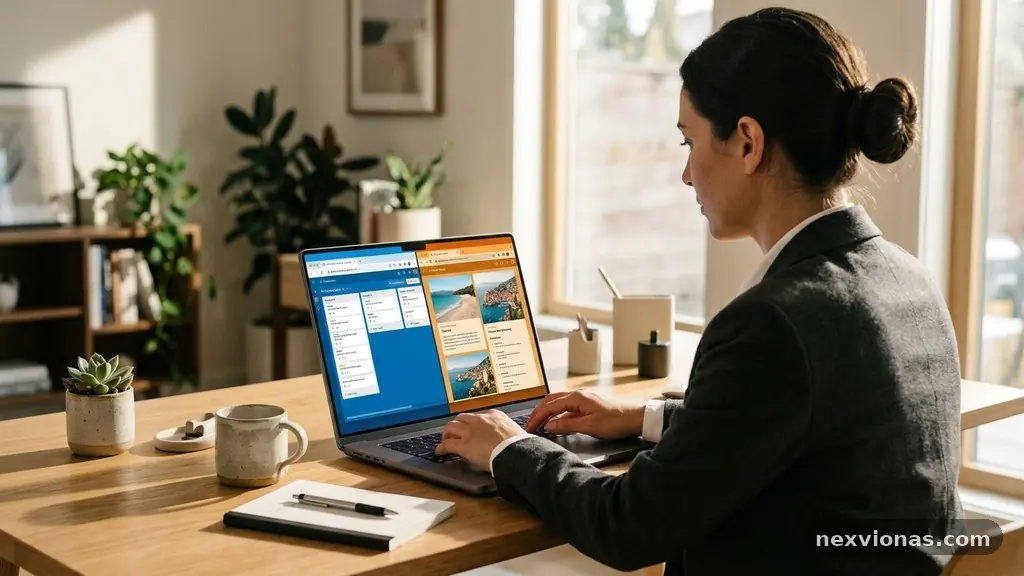
Separating Work and Personal Browsing Without Installing Extra Software is mostly a matter of using tools already built into your browser and operating system. Browser profiles, separate browser applications, guest mode, and different user accounts can keep work history, bookmarks, cookies, and saved passwords from blending together.
The best setup depends on whether you need convenience, stronger privacy, or a clear boundary on a shared computer. You’ll learn which option fits each situation, how to configure it safely, and where browser separation stops short of protecting activity from an employer, school, internet provider, or device administrator.
Start With Browser Profiles
For most people, browser profiles are the simplest answer. A profile creates a separate space inside one browser application, with its own bookmarks, browser history, cookies, cache, autofill data, saved passwords, extensions, and often synchronization settings.
That means you can open one profile for work and another for personal browsing without buying or downloading anything. In browsers that support profiles, look for a profile icon near the address bar or inside the settings menu, then choose an option such as “Add profile” or “Create new profile.”
Give each profile a clear name and visual identity. “Work” with a blue icon and “Personal” with a green icon are easier to distinguish than two generic profile labels, especially when several windows are open.
Use a work email account only in the work profile, and keep personal email accounts in the other one. This reduces accidental account switching and makes it less likely that a personal message, calendar, or cloud document will open under a work identity.
Profiles also help with browser synchronization. If you sign in to a work profile, check exactly what it syncs before enabling the feature, because synchronized history, bookmarks, passwords, and open tabs may travel to other devices connected to that account.
What a profile separates
A profile usually keeps its own cookies and active login sessions, so signing in to a work service in one profile doesn’t normally sign you into that service in the personal profile. It also gives each environment its own extensions and saved form information.
The separation is practical, not magical. A browser profile does not create a completely independent computer, hide your network address, or prevent an employer’s security tools from monitoring activity on a managed device.
- Work profile: company email, project management sites, business bookmarks, approved extensions, and work-related passwords.
- Personal profile: private email, shopping accounts, entertainment services, personal cloud storage, and non-work bookmarks.
- Shared profile: avoid this if the goal is a dependable boundary, because mixed cookies and autofill entries create avoidable mistakes.
If you want a browser-specific reference while setting this up, Google’s official Chrome profile instructions explain how profiles work and how to add or switch between them.
Use Separate Browser Applications
If your computer already has more than one browser installed, assigning one to work and one to personal activity creates an even more visible divide. For example, you might use the browser supplied by your employer for company systems and a different browser for personal accounts.
This approach does not require installing extra software if the applications are already present. Check the Start menu, Applications folder, or taskbar before downloading anything; many computers come with at least two browsers, or a second browser may already have been installed by the manufacturer or organization.
Separate applications have distinct storage areas for cookies, cache, history, extensions, and saved passwords. A shopping site opened in one browser won’t normally reuse the login cookie from another browser, which helps reduce cross-account confusion.
There is also a visual advantage. Different icons make it obvious which environment you’re opening, and separate taskbar windows are easier to identify during a busy workday. You can pin the work browser in one location and the personal browser somewhere else.
When two browsers work well
Separate browser applications suit people who need a clean, low-effort routine. A freelancer might keep client dashboards in one application and personal banking in another, while a household sharing a computer can reserve one browser for each person.
They’re also useful when one browser’s extensions interfere with a web application. Keeping ad blockers, password managers, shopping tools, or writing aids out of the work browser can improve compatibility and reduce the amount of personal browsing data stored alongside company sessions.
Important limitations
Two browsers don’t isolate the operating system itself. Downloads may still land in the same folder, notifications can appear across applications, and both browsers can access the same network connection.
They also don’t automatically separate bookmarks or files if you deliberately save everything to shared locations. Use clearly named folders such as “Work Downloads” and “Personal Downloads,” and review each browser’s download destination before relying on the arrangement.
| Method | Best use | What it separates | Main limitation |
|---|---|---|---|
| Browser profiles | One browser with distinct work and personal spaces | Sessions, cookies, history, bookmarks, extensions, and sync settings | Still runs inside the same browser application and operating system account |
| Separate browser applications | Clear visual and technical separation | Browser storage, extensions, sessions, and settings | Files, notifications, and network activity may remain shared |
| Private browsing mode | Short-lived sessions on a trusted personal device | Local history and some temporary site data after closing | Does not make activity invisible to employers, websites, or network operators |
| Guest mode | Temporary browsing without using a regular profile | Profile-specific history and sign-in state | Not designed for long-term work organization or strong anonymity |
| Operating system user accounts | Shared computers or stronger local separation | Desktop files, applications, browser data, and account settings | Requires switching accounts and may be restricted by an administrator |
Choose Private Browsing and Guest Mode Carefully
Private browsing mode is useful for a temporary session, but it is often misunderstood. When you close a private window, the browser generally removes the local history and temporary cookies created during that session, although downloaded files and bookmarks usually remain.
That makes private mode helpful when you need to check a personal account briefly on a trusted work computer, or when you’re using a shared personal device and don’t want a one-time search added to the regular browser history. It is not a replacement for a work profile.
Private mode may also start with a clean session, which prevents existing sign-ins from automatically opening. However, if you log into a personal account and leave the window open, the account is still active and visible to someone who can access the computer.
Guest mode goes a step further for temporary use in browsers that provide it. It typically opens a limited browsing environment without exposing the regular profile’s bookmarks, saved passwords, or extensions.
What private mode does not hide
Private browsing usually doesn’t hide activity from the websites you visit. Those sites can still receive your IP address, account details, device information, and actions taken while signed in.
It also doesn’t defeat monitoring on an employer-managed computer. Security software, web filters, DNS logging, proxy systems, and network records can operate outside the browser and may continue recording connections made in private mode.
Use it for local cleanup, not for promises of anonymity. If you need to protect personal browsing, the safer practical choice is to use your own device and connection rather than treating a private window as a shield.
Build a Reliable Daily Routine
Technology only creates separation when your habits support it. Decide which environment opens first each morning, and make switching deliberate instead of clicking whichever window is already visible.
A simple routine is to open the work profile or work browser at the start of the day, finish active tasks, then close work windows before opening personal browsing. This creates a clear transition and reduces the chance of replying to a personal email from a company account.
Use separate bookmarks for each environment. Work bookmarks might include the company intranet, timekeeping portal, project tracker, and approved document storage, while personal bookmarks can contain banking, shopping, travel, and entertainment sites.
Don’t rely only on color. Add descriptive names and keep the two browser windows in different virtual desktops if your operating system supports them. A visible label such as “CLIENT PROJECTS” is easier to recognize than a tiny profile avatar.
A practical switching checklist
- Close or minimize the current environment: finish sensitive forms, sign out where appropriate, and close tabs that contain confidential information.
- Check the profile or browser icon: confirm that the next window belongs to the intended account before opening email or cloud storage.
- Use the correct bookmarks: avoid typing a familiar address into the wrong profile when a saved work or personal shortcut is available.
- Review downloads: make sure a work report or personal receipt is going into the correct folder.
- End the session deliberately: lock the screen, close the browser, or sign out before leaving a shared computer.
Notifications deserve attention too. A personal messaging service can expose private information during a presentation, while a work calendar notification can appear during personal time. Adjust notification settings within each browser profile or operating system account so the boundary works in both directions.
Separate Accounts, Passwords, and Synchronization
Account separation is one of the strongest reasons to avoid a single mixed browser space. Work email accounts and personal email accounts should not share a profile if you frequently switch between them, because autocomplete, cookies, and saved sign-in sessions can make the wrong account appear first.
Use unique passwords for every important account, and save them only in the intended profile or approved password system. A saved password placed in a shared browser can be exposed to anyone who can unlock that profile, even if the website itself uses strong security.
Browser synchronization needs a careful review. Turning on sync may copy open tabs, bookmarks, autofill data, browsing history, extensions, and passwords to other devices, depending on the browser and settings.
A work account may be governed by company retention, security, or monitoring policies. A personal account may sync information to a family tablet or home computer. Before accepting a synchronization prompt, inspect the categories and confirm which account is active.
Keep autofill and cookies from crossing over
Autofill can expose more than names and addresses. It may suggest phone numbers, shipping information, payment details, or work contacts, so separating profiles reduces the chance of sending personal data through a business form.
Cookies maintain sign-in sessions and preferences. Clearing them can solve a mixed-account problem, but it may also sign you out of useful services; using separate profiles from the beginning is less disruptive than repeatedly deleting shared browser data.
Cache files generally improve loading speed and aren’t the same as browsing history, but they can still contain locally stored website resources. A profile boundary keeps ordinary browser storage organized, while device encryption and a strong screen lock provide protection if the computer is lost.
Use Operating System User Accounts for Shared Devices
Browser profiles are convenient for one person, but operating system user accounts provide a stronger local boundary when several people use the same computer. Each account can have its own desktop, files, browser settings, saved passwords, and application preferences.
On a family computer, one person can use a personal account while another uses a separate account for work or study. The computer then opens the appropriate desktop and browser data after login, rather than relying on everyone to remember which profile to select.
This arrangement also protects local files more effectively. A work document saved to one user’s desktop is less likely to appear in another user’s file browser, though administrators may still have access and shared folders can bridge the accounts.
Windows, macOS, and many Linux distributions support multiple user accounts, but the exact controls vary. Some work computers prevent users from creating accounts, while company administrators may manage profiles, applications, storage, and logging centrally.
When a second user account is worth the effort
Choose separate operating system accounts when the device is shared, when work files must remain apart from household files, or when another person needs regular access. The extra login step is small compared with the confusion caused by mixed documents and credentials.
It’s less useful when you are the only user and simply need two browsing contexts. In that case, browser profiles or separate browser applications are faster and easier to maintain.
Use a strong password or passcode for each account, enable automatic screen locking, and don’t assume that logging out of a website is enough. If another person can open your operating system session, browser separation offers little protection.
Protect Browsing Privacy Without Overpromising
Separating work and personal browsing improves organization and reduces accidental data sharing, but it doesn’t make either activity anonymous. Privacy has several layers: the local browser, the device, the network, the websites, and the organization that owns or manages the equipment.
A personal profile can keep work cookies out of a shopping session, yet the network may still see that the computer connected to a particular service. A company laptop may also have endpoint security tools that record application use, visited domains, downloads, or security events.
The safest boundary for genuinely private activity is a personally owned device used on a connection you control. Even then, websites can identify logged-in users, advertising systems can track behavior, and a browser’s privacy settings cannot erase information already collected by online services.
Reduce exposure in each environment
- On a work device: assume business systems may be monitored and use personal accounts only when company policy allows it.
- On a personal device: keep work credentials in a dedicated profile and install only extensions you trust.
- On a shared computer: use an operating system account, lock the screen, and avoid saving passwords in a common profile.
- On public equipment: use guest or private mode, never save passwords, and sign out before leaving.
- For sensitive personal tasks: prefer your own device and avoid entering financial or identity information on equipment you don’t control.
Review browser extensions as part of privacy maintenance. An extension can have access to page content, browsing activity, or form data, so a work profile should contain only extensions that are necessary and permitted.
Finally, check browser history and account activity periodically. Unexpected entries, unfamiliar extensions, or new synchronized devices may indicate a misconfiguration or a security problem that should be addressed promptly.
Troubleshoot Common Separation Problems
The most common failure is opening a new tab in the wrong environment. If personal email keeps appearing in work windows, confirm the profile label, remove mixed bookmarks, and close duplicate browser windows that make the active context unclear.
Another problem is a shared download folder. Create separate folders and verify the destination in each profile or browser. If a company requires documents to be stored in a particular managed location, follow that rule rather than moving files to a personal folder for convenience.
Unexpected sign-outs can happen when a browser blocks cookies aggressively or when synchronization settings change. Check whether the site needs third-party cookies, whether the profile is signed in correctly, and whether an employer’s policy resets browser data.
When separation is not working
If work and personal sessions continue to merge, stop using one shared profile. Move bookmarks to the correct environment, remove saved passwords that belong elsewhere, and sign out of accounts before rebuilding the arrangement.
If the device is managed, ask the organization what it can monitor and which browser settings it controls. Don’t attempt to bypass security controls; use a personal device for personal browsing instead.
When privacy is the central concern rather than convenience, operating system accounts and separate devices are stronger choices than browser profiles alone. The right solution is the one that matches the risk, not merely the one with the fewest clicks.
Frequently Asked Questions
Are browser profiles as private as separate browsers?
They provide a similar separation for cookies, history, bookmarks, extensions, saved passwords, and active sessions, but both profiles still run inside the same application and operating system account. Separate browsers create a clearer technical and visual divide, while separate operating system accounts provide stronger local separation.
Does private browsing hide activity from my employer?
No. Private browsing mainly limits what is saved locally after the window closes. Employer monitoring tools, managed network equipment, web filters, and security systems may still record activity on a company device or connection.
Can I use one password manager for work and personal accounts?
You can, but check company policy and understand the risks. Separate vaults or clearly labelled folders can help, while keeping work credentials in an employer-approved system and personal credentials in a personal system creates a cleaner boundary.
Should I use guest mode on a shared computer?
Guest mode is suitable for a short session when you don’t want to expose your regular profile’s bookmarks, cookies, or saved passwords. Don’t rely on it for private communications if the computer or network is managed by someone else.
What is the easiest setup for one person?
Start with two browser profiles, label them clearly, disable unnecessary synchronization, and keep separate bookmarks and downloads. If you still mix accounts, move to separate browser applications or operating system user accounts.
Make the Boundary Easy to Keep
Separating Work and Personal Browsing Without Installing Extra Software works best when the setup is visible, repeatable, and matched to the device you’re using. Begin with browser profiles, add separate applications or operating system accounts when the risk or confusion increases, and treat private mode as a temporary cleanup tool rather than an invisibility cloak.
Set the profiles up once, remove mixed credentials, check synchronization, and create a habit of confirming the active environment before opening sensitive accounts. With those small steps, work stays focused, personal browsing stays in its own space, and the boundary becomes easier to maintain every day.